
Always the Plan: How the Cross Was Written Into the Calendar Long Before Good Friday
Have you ever tried to read a story out of order, starting in the middle, skipping to the end, flipping back to a random chapter, and then wondered why none of it made sense? That is what the last week of Jesus' life can feel like if you do not know what you are looking at. An innocent man arrested at night. A guilty man set free. A king mocked with a crown of thorns. Darkness in the middle of the afternoon. Out of order, it reads like chaos.
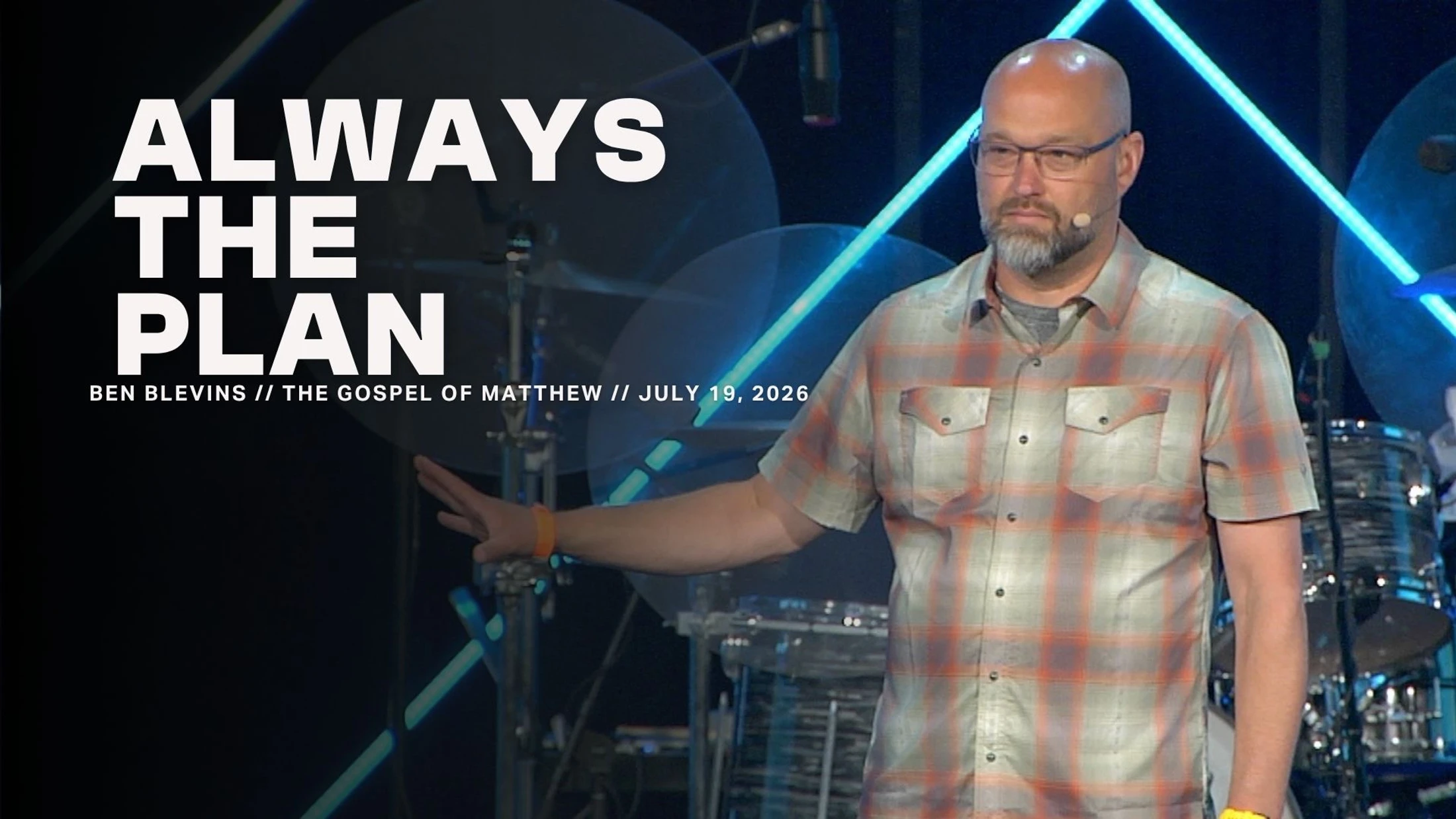
That is the story Pastor Ben Blevins walked us through this week, except he handed us the missing piece: the calendar. Every beat of that week, the trial, the cross, the empty tomb, and everything that came after, had already been written onto Israel's calendar over a thousand years earlier. This was not a rescue plan improvised at the last minute. It was always the plan.
A Lamb Chosen Before Anyone Knew They Needed One
Long before Rome, before Pilate, before a crowd shouting for Barabbas, God told Moses to say something strange to Pharaoh: "Israel is my firstborn son... let my son go, so he may worship me" (Exodus 4:22-23). A firstborn son, marked out, claimed, and protected. Protecting that claim would eventually cost a household a lamb, chosen four days before it was needed, set apart on the tenth of the month so it could be sacrificed on the fourteenth, on Passover.
Farmers on the Palouse know what it means to live by a calendar they do not control. You do not talk the wheat into ripening early. God works the same way, except he is the one who set the date. Jesus stepped into Jerusalem on that same calendar, in that same window. Chosen. Set apart. Not caught off guard by Friday. The lamb was picked long before the household even understood how much they would need it.
An Innocent Man Traded for a Guilty One
When the crowd gathered before Pilate, he offered a choice: release Barabbas, or release Jesus, called the Messiah (Matthew 27:17-19). Pilate knew the charge against Jesus was jealousy dressed up as justice. His own wife sent him a warning mid-trial: "Do not have anything to do with that innocent man, for I have suffered a great deal today in a dream because of him." Even the people closest to the decision could see it plainly. Jesus was innocent. Barabbas was not.
Be honest. If you had been standing in that crowd, unaware of the bigger story, you might have shouted for Barabbas too. He was the choice you could see. Jesus was the choice that only made sense once you knew the plan. That is the Passover lamb, standing in the place of someone who deserved judgment, playing out in real time in front of people who had no idea what they were witnessing.
A King Mocked, and a King Proven Right
The soldiers stripped him, dressed him in a scarlet robe, twisted together a crown of thorns, put a staff in his hand, and knelt in front of him laughing, "Hail, king of the Jews!" (Matthew 27:26-29). They meant it as an insult. They had no idea they were telling the truth. Later, the sign nailed above his head, "this is jesus, the king of the jews," was written to shame him publicly. It ended up being the most accurate headline in human history, hung there by people mocking what they could not see.
The Cup He Drank So You Would Not Have To
From noon until three that afternoon, darkness came over the land. Jesus cried out, "My God, my God, why have you forsaken me?" That cry only makes full sense next to Isaiah 51. God had told his people they had been drinking "the cup of his wrath," staggering under it, with no one able to comfort them, but he promised a day when he would take that cup out of their hand and place it into the hand of their tormentors instead (Isaiah 51:17-23).
On the cross, Jesus took that cup. All of it. Not a sip, not a symbolic gesture. He drank the full weight of what we deserved so that we would never have to hold it ourselves. That is what he meant the night before, when he took the cup at the table and said, "This is my blood, given for you, poured out for you." The cup of redemption only makes sense because someone first drank the cup of wrath in our place.
The Firstfruits of a New Kind of Life
Three days after Passover, on the fifteenth, Israel celebrated the Feast of Unleavened Bread, followed soon after by Firstfruits, the first evidence that a harvest was coming. Jesus rose from the dead on that same feast day, the first day of the week. Paul later wrote that Christ has been raised as "the firstfruits of those who have fallen asleep" (1 Corinthians 15:20-23). His resurrection is not a lonely, isolated miracle. It is the first sign of a full harvest still coming, and everyone who belongs to him is included in it.
Forty Days That Prove It Was Real
For forty days after the resurrection, Jesus appeared to his followers and gave "many convincing proofs that he was alive," teaching them about the kingdom of God (Acts 1:3). Forty days of proof, echoing the forty years Israel spent in the wilderness watching God provide food and water when they had no way to provide it for themselves. God does not simply make a promise and disappear. He sticks around long enough to prove it, over and over, until the proof is undeniable.
Two Mountains, Two Outcomes
Fifty days after Passover comes Shavuot, the feast celebrating the giving of the law at Sinai, a moment remembered as costing three thousand lives after Israel turned to a golden calf. Fifty days after the resurrection came Pentecost, the day the Spirit was poured out and Peter stood up and pleaded with the crowd, "Save yourselves from this corrupt generation." That day, three thousand people were saved and baptized (Acts 2:40-41).
Same feast. Same number. Completely different outcome. At one mountain, the law exposed people's guilt and three thousand died. At the other mountain, the Spirit rescued people from that guilt and three thousand were added to life. That is not a coincidence buried in ancient math. That is the entire gospel, condensed into a single detail on the calendar: the law reveals what is wrong with us, and Jesus provides what we could never earn on our own.
Taking It Into Your Week
Near the end of his message, Pastor Ben prayed something worth carrying with you: "When it feels like the world is spinning out of control and nobody cares, you are still there." Sit with these questions in that light this week:
- Where right now does it feel like things are spinning out of control?
- Can you look back on a season you once called chaos and now recognize as part of a plan?
- The lamb was chosen four days before it was needed. What would it look like to trust that God has already provided for something you have not even faced yet?
- Jesus drank the full cup so you would not have to. Is there guilt or shame you are still carrying that he already carried for you?
- Three thousand died at Sinai. Three thousand were saved at Pentecost. Which mountain are you living on right now: rules that expose you, or the Spirit that is remaking you?
Join Us This Sunday
None of this was Plan B. Not the arrest, not the cross, not the silence of the tomb for three days, not the waiting that came after. It was always the plan, and it still is, even in whatever your today looks like. We gather every Sunday at 9:00 AM and 11:00 AM at the Eastside Marketplace in Moscow. We have a place for your kids too through Lifer Kids, and each week we take communion together as a family, remembering the cup Jesus already drank for us.
Come as you are. We would love to meet you.